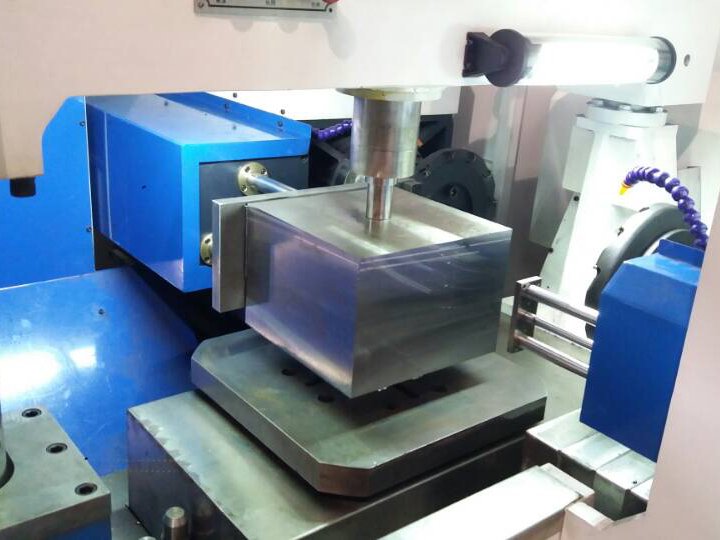
The manufacturing world is scaling up, with industries from aerospace and shipbuilding to energy and heavy equipment pushing the boundaries with massive components. This shift means traditional machining setups are often inadequate. If you’re looking to tackle oversized projects with precision and efficiency, you need to understand the power of gantry-type machine tools. They represent a significant evolution in handling large-scale manufacturing challenges. Ready to discover how these machines are shaping the future of big part production?
What Exactly Are Gantry-Type Machine Tools?
So, what exactly are these gantry-type machine tools you’ve been hearing about? Imagine a traditional milling machine. The workpiece typically sits on a table that moves in X and Y directions, while the spindle moves in Z. A gantry machine is different. Picture a large bridge-like structure, the “gantry,” that spans over the workpiece. This gantry moves along the longest axis (usually X), while the cutting head (spindle) moves along the other two axes (Y and Z). It’s like building the machine around the workpiece, rather than fitting the workpiece into the machine.
Why is this design so important? It allows for incredibly large work envelopes, with machines capable of handling components that could fill a small room! This design offers superior rigidity and accuracy, especially for long or wide parts. The load is distributed more evenly, reducing stress and vibration. And the beauty of it: the fixed position of the workpiece means you can load and unload massive items without moving them extensively, saving time and reducing the risk of damage. It’s a game-changer for industries dealing with scale.
The Advantages of Gantry Design for Large Parts
You might be thinking, “Why go through the trouble of a gantry design?” It all comes down to handling those really big jobs. You know, the ones where your standard machines just can’t cut it. The primary advantage of gantry-type machine tools is their immense work envelope. Because the structure spans over the workpiece, the potential size of the parts you can machine is vastly increased. Think about huge aerospace structures, massive molds for industrial applications, or components for wind turbines. A gantry machine can accommodate them where others simply can’t.
But it’s not just about size. This design offers incredible stability and rigidity. Because the gantry structure is so robust and the workpiece remains stationary, vibrations are significantly reduced. This means you can achieve higher accuracy and better surface finishes, even on massive parts. And here’s a bonus: loading and unloading large, heavy components is often much easier. You can typically access the workpiece from multiple sides, and the stationary nature of the part reduces the need for complex material handling systems. It’s a design that truly excels when size and precision are paramount.
Applications: Where Do Gantry Machines Shine?
So, where do you typically find these impressive gantry-type machine tools in action? They are the workhorses in industries that deal with large-scale manufacturing. Think about aerospace, where they are used to machine huge aircraft components like fuselage sections or wing spars. Then there’s the maritime industry, where gantry machines are essential for fabricating massive ship parts.
Consider the energy sector, especially for components used in power generation, like large turbine housings or generator parts. And in heavy equipment manufacturing, these machines handle everything from excavator booms to large industrial molds. Basically, any industry requiring the machining of parts too large or too heavy for conventional machines is a prime candidate for gantry systems. Their ability to maintain accuracy and rigidity over extended travel distances makes them indispensable in these demanding fields.
Key Features to Consider When Choosing a Gantry Machine
Alright, you’re convinced that gantry-type machine tools might be the answer for your large-scale projects. But what should you look for when choosing one? It’s not a one-size-fits-all situation. First off, consider the axis configuration. Most gantry machines are 3-axis, but you can find 5-axis versions for more complex contouring. Think about the types of parts you’ll be making. Do you need to machine at an angle or on multiple faces in one setup?
Next, pay close attention to the spindle specifications. What kind of power and speed do you need for the materials you’ll be working with? For heavy-duty materials, you’ll want a robust spindle with good torque. And don’t forget about accuracy and repeatability. Look at the machine’s specifications for positional accuracy and how consistently it can return to the same point. This is crucial for those large, critical components. Finally, consider the size of the work envelope. Measure your largest potential parts and ensure the machine can comfortably accommodate them, with room to spare for tooling and fixturing. It’s all about matching the machine to your specific needs.
The Operational Benefits: Beyond Just Size
We’ve talked a lot about size, but what are the day-to-day operational benefits of using gantry-type machine tools? Beyond just handling big parts, these machines often offer improved efficiency. Since the workpiece is stationary, loading and unloading can be streamlined. Imagine setting up your next part while the current one is being machined – that’s a huge time saver! This leads to increased machine utilization and higher throughput.
And what about accuracy? With robust construction and the ability to minimize workpiece movement, gantry machines often deliver superior accuracy and surface finish compared to conventional machines attempting similar large-scale tasks. This means fewer errors, less rework, and higher quality parts. Plus, for certain applications, the fixed workpiece setup can lead to reduced fixturing costs. You might not need as elaborate or expensive clamping systems as you would for a large part on a moving table. It’s these operational advantages that make gantry machines a smart investment for serious large-scale manufacturing.
Moving Forward with Large-Scale Machining
You’ve journeyed through the world of gantry-type machine tools, understanding their unique design, the advantages they offer for large-scale projects, and where they truly shine. We started by defining what they are and why their bridge-like structure is so revolutionary. Then, we explored the immense work envelope and superior rigidity they provide, making them indispensable for industries like aerospace and energy. We also touched upon the critical features to consider when selecting one, from axis configuration to spindle power.
Before: struggling with oversized parts and limited machining options. Then: adopting gantry-type machine tools → enabling machining of components previously too large. Now: achieving higher accuracy, improved efficiency, and reduced cycle times on massive projects. Now that you understand the power and versatility of these machines, you can confidently explore how they can transform your large-scale manufacturing capabilities. Take the next step in scaling up your production and tackling the biggest challenges with the right equipment.


